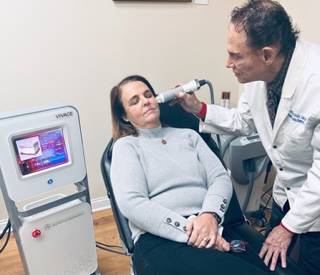
RF Microneedling lifts saggy skin, contouring the neck, declotte, jowls, abdomen and buttocks while manufacturing collagen fiberblasts and elastin. Tightens and brightens while giving radiant tone, eliminating fine lines, wrinkles and pores. Reduces frown lines, double chin, acne, stretch marks and scars.
After applying a topical anasthetic, the Big V RF Microneedle will start its magic with 36 fine gold tip needles which penatrate deep into the epidermis opening microchannels while radio frequency initiates new skin formation. Immediately following the procedure, you will receive a soothing growth factor facial mask to insure optimal results.
All types of skin will benefit from RF Microneedling.
After the treatment you can resume daily activity adding exercise and make-up after 24 hours.
Made famous
by Kim Kardashian, it is a combination of the microneedling with PRP (platelet
rich plasma) applied during the procedure with excellent penetration. A platelet rich plasma (PRP) treatment treats you
with your own 23 growth factors. These treatments promote abundant new growth
of your own collagen and elastic tissue, generating naturally smoother and
tighter skin. This is an excellent way to rejuvenate your skin making it
bright, tight and smooth with removal of fine wrinkles and blemishes.
Proper
preparation of PRP (platelet rich plasma) is a multistage process which
requires specific knowledge and is accomplished under strict conditions. It
must purify and preserve major growth factors and
must be carried out in a precision refrigerated centrifuge able to apply 3500 g
forces at a precisely 16 degree Celsius (60.80 F). Proper PRP cannot be made in
most spas or aesthetic offices because they use unrefrigerated slower centrifuges
and do not remove the fibrin which depletes the growth factors.
How would
you like to have a facial treatment that rejuvenates your skin, improves
elasticity and stimulates collagen production while treating common problem
such as:
Acne, chicken pox or trauma scars
Smile line, wrinkles lines or any
other age-related lines
Procedure:
The procedure
begins with drawing your blood and using a refrigerated centrifuge to extract
platelet-rich plasma (PRP). The patient
under goes a micro-needling treatment with PRP with very advanced results.
Frequently
asked questions:
How long
does the treatment take?
About 90 minutes allowing for the
preparation of your PRP.
How many treatments do I need?
Your skin will change remarkably after the
first treatment. Through the treatment may be done in a series. The doctor will
talk with you about this during your complimentary consultation.
When will I see the results?
Results will begin to visible 2 weeks
after treatment and will continue to improve much longer.
How long do
the results last?
Treatment results vary. In most
patients, the results last up to 18 months and are maintained with periodic
touch ups.
How do I prepare for treatment?
Do not use retinol or other
photosensitizing topical for 5 days prior to your treatment.
Do not receive sun exposure or
sunburned skin for 2 weeks prior to your treatment.
What can I
expect after treatment?
On the day
following your treatment you may experience some redness and tenderness similar
to sunburn. This redness and any swelling should be subsiding by the third day.
How many treatments do I need?
Your skin will change remarkably after the
first treatment, through the treatment maybe done in a series. The doctor will
talk with you about this during your complimentary consultation.
When will I see the results?
Results will begin to visible 2 weeks
after treatment and will continue to improve much longer.
How long do
the results last?
Treatment results vary. In most
patients, the results last up to 18 months and are maintained with periodic
touch up.
Before
Treatment:
Avoid sun exposure,
including tanning beds 4-5 weeks before and 4-5 weeks after treatment.
The Day of
your treatment:
An hour before, take 2 Extra Strength
Tylenol for discomfort. Do not use aspirin, Excedrin, ibuprofen, or any other
medicine which thins blood.
You may use ice packs before
treatment to reduce discomfort
Do not apply moisturizers lotions,
sunscreen, perfume or cosmetics to that surface of your skin.
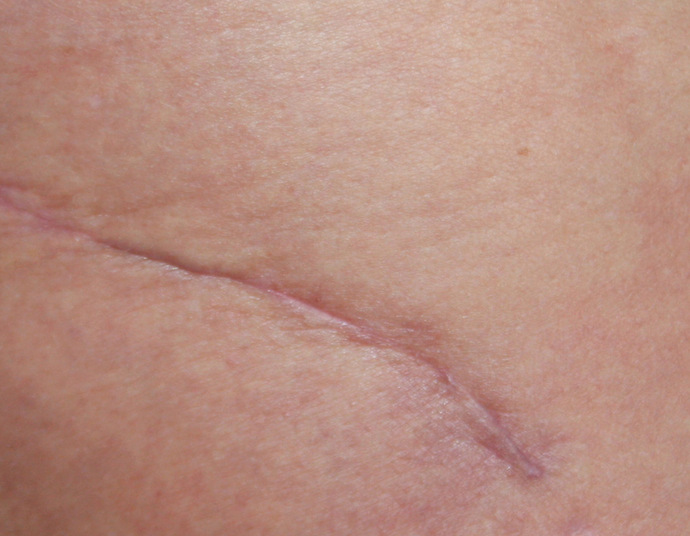
Scarring can occur when a mark is left after the healing of a wound or after an injury to the skin’s surface, maybe by a burn or sometimes from a medical procedure. A scar is a biological repair of the body’s tissues and skin, and is a natural healing process.
Myth: A Scar from a Pimple Is Not Permanent
Fact: A scar from a pimple may sometimes be temporary, but may become permanent. This is especially the case if one squeezes a pimple to get rid of it. Not only can this popping method spread bacteria and worsen the acne skin condition, but it can lead to permanent scarring.
Myth: Plastic Surgery Does Not Involve Scarring
Fact: Plastic surgery does involve scarring, as there is still the cutting of tissues. The difference is that this cutting and sometimes scarring is in a concealed area of the skin or body. This hidden scar that is usually a fine line may be hidden along the hairline or inside the nose, in the creases of an eyelid, or behind the ears. Finer needles and techniques are used for minimal scarring.
Myth: All Acne Scars Should Be Treated by a Dermatologist
Fact: Not all acne scars need to be treated by a dermatologist. Mild acne scars can sometimes be treated at home with natural remedies such as apple cider vinegar, Aloe Vera, lavender oil, sandalwood paste, tomato slices, egg whites, olive oil, lime juice and more. It is recommended to seek attention from a dermatologist if the acne scar is deep or if a severe infection may be present, as a permanent scar could form.
Myth: Vitamin E Should Be Applied Immediately on a Wound
Fact: Vitamin E cream or oil has been known to penetrate the layers of the skin to minimize free radicals that could interfere with healing, but applying the cream or oil too soon after a cosmetic procedure or surgery or when the wound is fresh, could prevent it from healing properly on its own. Most physicians recommend to wait at least two weeks before applying this type of cream to the wound.
Myth: Scars Cannot Be Removed
Fact: A scar can take 12 to 18 months to form completely, and can take as long as 24 months to disappear. If scars do not go away, a dermatologist or cosmetic surgeon may be able to assist. Many scars can be removed by lasers or surgery.
Myth: A Red Scar Is an Indication of a Permanent Scar
Fact: A red scar on a wound from a cosmetic or surgical procedure is the result of new blood vessels forming at the site of the skin injury to form new cells. This redness is a normal indication of healing. If there is heat and/or inflammation around the area of injury, then this may be an infection and may be more than temporary scarring.
Ingrown hair occurs when the hair grows under the skin and doesn’t surface, as it normally would. The condition is more likely to occur in areas that are shaved or waxed and may affect both men and women.
Ingrown hair is an esthetic problem more than a health problem. However, ingrown hair may lead to complications as well. Knowing the causes of ingrown hair can be helpful to be able to prevent this problem in the future.
Dry Skin
People with dry skin, both men and women, are more exposed to getting ingrown hair. This is due to the fact that there will be a lot of dead skin cells, and these may often cover the pores, preventing the hair to surface. This problem may be solved with proper moisturizing of skin and frequent use of creams that will keep the skin hydrated. The entire body needs this treatment.
Coarse Hair
Coarse hair that grows in a curved hair follicle is a cause of ingrown hair. This problem cannot be prevented, but there are a few laser treatments that may influence the quality of the hair and make it softer.
Oil in the Hair Follicles
Oil gathering in the hair follicles may also cause ingrown hair. This problem may be caused by various factors:
Hormonal problems
Hyperthyroidism
Excessive production of skin oils
Use of unsuitable moisturizing creams that make the skin oily
Poor hygiene
Dead Skin Cells in Pores
If the dead skin cells are not removed on a regular basis, these may gather and clog up the pores, resulting in ingrown hair. Getting a gentle skin peeling solution and using it twice per week can solve this problem.
Genetic Predisposition
In some cases, the ingrown hair is an inherited condition. After the hair is removed (i.e. after shaving), the skin may tend to grow covering the pores and the hair follicles.
Certain Hair Removal Procedures
Certain hair removal procedures can cause ingrown hairs:
Shaving, especially when using a blade that is too close to the skin
Waxing
Electric epilator
Electrolysis
These methods remove the hair follicles fully or partially, but until the hair starts growing, dead skin cells can cover the pores. Also, using these techniques can irritate the skin, stimulating the accumulation of dead skin cells and the covering of the skin pores.
Ingrown Hair Removal
The ingrown hairs may be prevented by exfoliating the skin on a regular basis and before the hair removal. However, there are also other methods to remove hair including laser systems, electrolysis, or removal with tweezers or sterile needles.
There are two different kinds of freckles. The more common of the two are ephelides, which are flat, light brown marks that tend to fluctuate with the seasons. They can get darker in summer and lighter in the winter time.
Nobody is born with them. Have you ever seen a newborn baby with freckles? Nope. Never. Despite what some people say, freckles are absolutely always from sun exposure.
They’re an indication of how sensitive your skin is to the sun. In some people, melanin is produced evenly through the skin. When it’s not, freckles are little clumps of melanin that fluctuate with the sun.
Not all redheads have them. While redheads have less melanin in their skin, contrary to popular belief, not all of them have freckles. They’re thought to be controlled by the same gene, but red hair is recessive, and freckles are a dominant trait. Roughly 80% of redheads have an MC1R gene.
In Medieval times, they were considered witches’ marks. Never mind the fact that men have and will alway be just as susceptible them–right up there with moles, warts, and birth marks—freckles were said to be indicative of a women’s allegiance to the devil.
Did you know that smoking dramatically hastens the onset wrinkles. Most people know that smoking leads to premature signs of aging, but do you know why? First, smoking robs the blood of oxygen, which is essential for healthy skin. Second, it constricts the blood vessels, making it difficult for them to carry what little oxygen is in the blood stream to cells, including skin cells. Third, smoking introduces destructive chemicals into the blood stream, which attack collagen and elastin, two proteins that are vital for elastic skin. Without these proteins, the skin starts to sag. All these side effects lead to dull, dry, saggy skin. In addition, the repeated motion of pursing the lips around the end of a cigarette causes dynamic wrinkles to form around the mouth.